Leslie WYLIE
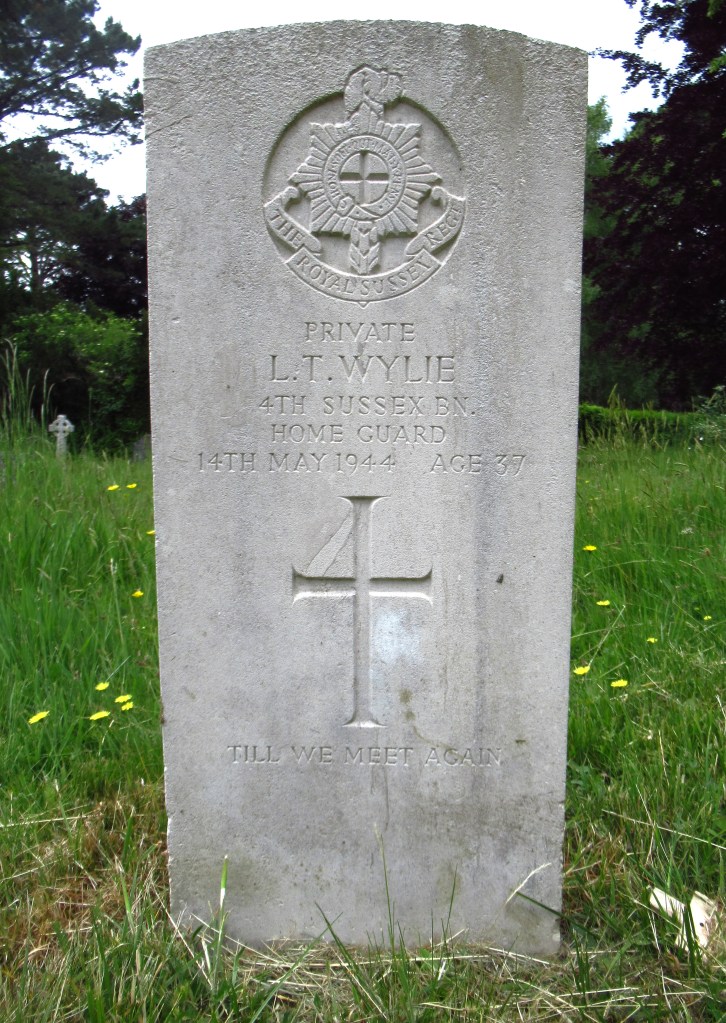
Private Leslie Thomas Wylie of the 4th Sussex Battalion Home Guard, died on the 14th May 1944 on the Steyning range, during a training event. The Home Guard had been using the gas training building and were being taught first aid when an artillery shell, fired from the South Downs training ground, exploded amongst them. Leslie Wylie (37 years old, from Maplehurst) died on the spot and is buried at St. Andrew’s Church in Nuthurst. The field where Leslie died and the location of the gas training building, is now named in memory of him.
GILBERT SAUNDERS
In the early days of work at the rifle range we were very grateful to make contact with Gilbert Saunders, also in the 4th Battalion Sussex Home Guard, who was 16 years old in 1944. He was part of group of men conducting their gas training, that included Leslie Wylie, when the shelling incident occurred. Gilbert was always happy to help with any questions and discuss the site, visiting the range on a number of occasions. On the 14th May 2014, the 70th anniversary of the incident, we returned to the range with Gilbert for a small memorial. During a subsequent open day, Gilbert came down and demonstrated his knowledge of marking shots, the terminology returning instantly to him, despite the fact that last time he had shot at the range was in 1947.
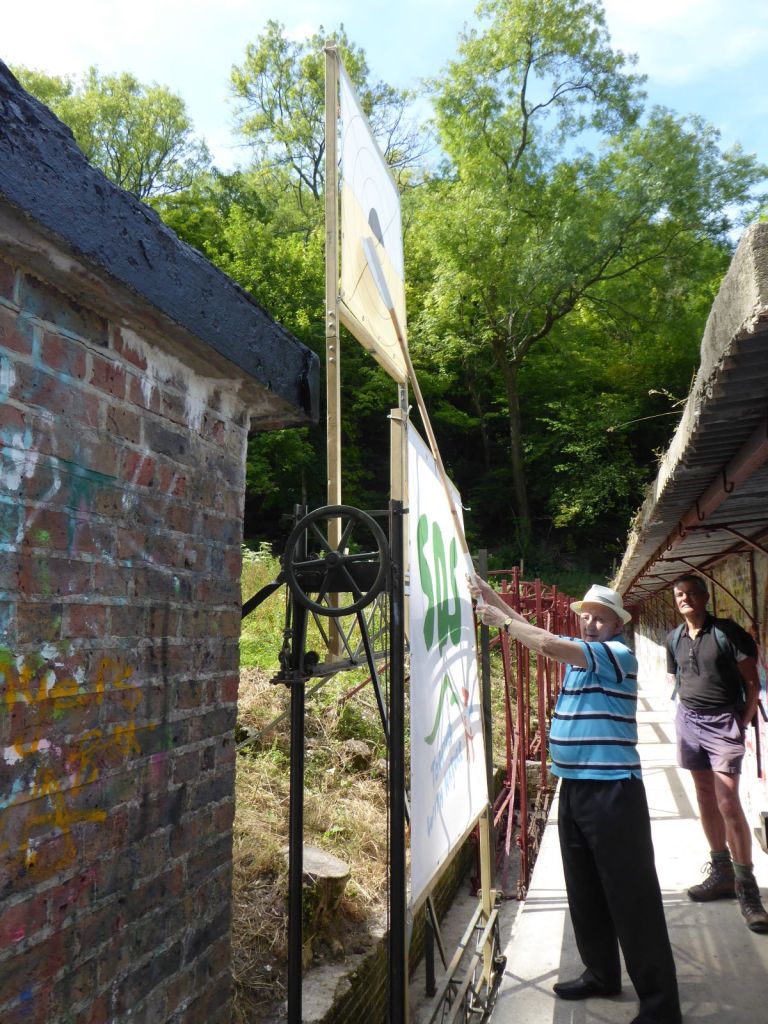
The following paragraphs are a write up of a discussion with Gilbert in 2014, for the original rifle range report.
Gilbert, as part of the Partridge Green Home Guard, used the range regularly in 1944, in the allotted Home Guard slot on Sundays. He recalled how some of the Home Guard in their 70s and 80s would repeatedly miss the target and were ultimately not allowed to shoot, quoting an example ‘I think you’d better give up Fred. Five rounds and you missed the lot!’. A coal cart would bring the Home Guard onto site (used for collecting children for school as well as coal deliveries) and Captain Green was once heard to say ‘For Christ’s sake Jessie, don’t put it into reverse, or we’ll end up down that hill!’, referring to the Spring Head Shaw valley slope. They would have one hour of practice on the range, firing 40 to 50 rounds before swapping to man the targets – four or five platoons would cycle through this process during the morning shift. Once their rifle shooting schooling was complete for the day another activity they might engage in was gas training, in the building on the northern valley slope.
On the 14th May 1944 Gilbert and his colleagues had completed their two minutes of respirator training in the gas training building. They were then asked to stand in a circle around a sergeant, who was to administer a small amount of mustard gas, on a cotton pad, to each man’s hand. Mustard gas affects the skin, leaving large blisters, similar to those caused by a burn. The point of this would be to know how to deal with the afflicted area, with an ointment and dressing, acting quickly before serious damage was done. Gilbert’s dose of mustard was to blister very painfully over the next day, however, as it was never properly attended to – at that moment, a sound unfamiliar to him grew in intensity in the sky above. His father and the other older men, who had fought in the Great War, dived instantly to the ground for cover, recognizing the sound of incoming artillery shells. Gilbert was frozen to the spot not sure of what was happening, until the blast from an exploding shell brought the reality home. Four shells detonated within 15 seconds, three in the trees, one by the gas chamber. One man, Private Leslie Thomas Wylie, was killed, while two others were injured, one of these inadvertently shielding Gilbert from the worst of the blast, had his calf muscles removed. Gilbert recalled that his first reaction after the event was to call for his father, who was similarly on his feet looking for his son. Lieutenant Greenwood, the man who suffered blast damage to his legs was treated in Roffey hospital, (where Gilbert visited him). although he was never able to walk again. Approximately 13 shells fell in total, some landing in Steyning, with a second fatality, 16 year old Arthur John Candler, killed while gardening.
Gilbert entered the army in 1945 with the Royal Sussex Regiment, aged 18, gained a qualification for marksmanship and later became a Bren gunner. Although he missed fighting as a soldier in the second world war, his experiences in the Home Guard, as a soldier in occupied Germany and later in India are of equal interest. Having been through some special forces training, Gilbert was due to be sent to Burma, but en route, one of the aircraft crashed and wiped out half of his unit. He subsequently joined the Queen’s Royal Regiment in India, remaining there until India gained independence. On demobilisation, in 1947 at Crowborough Camp, some of his contemporaries from London would jest that as a country lad he hadn’t experienced German bombing during the many air raids of the war. Gilbert responded that though this might be the case, he had experienced shelling, by artillery. His colleagues did not take this seriously, but in a matter of days one of their final training shoots was scheduled to be at Steyning rifle range, the site Gilbert knew well. He described to them the events surrounding the shelling in 1944 and drew a map of the Steyning range, to prove his story. On arrival at the site, and seeing the range was as Gilbert described, they ultimately took him at his word.

The Queen’s Royal Regiment (presumably in India) 1946. Gilbert is in the 2nd row from the back, 2nd from right.
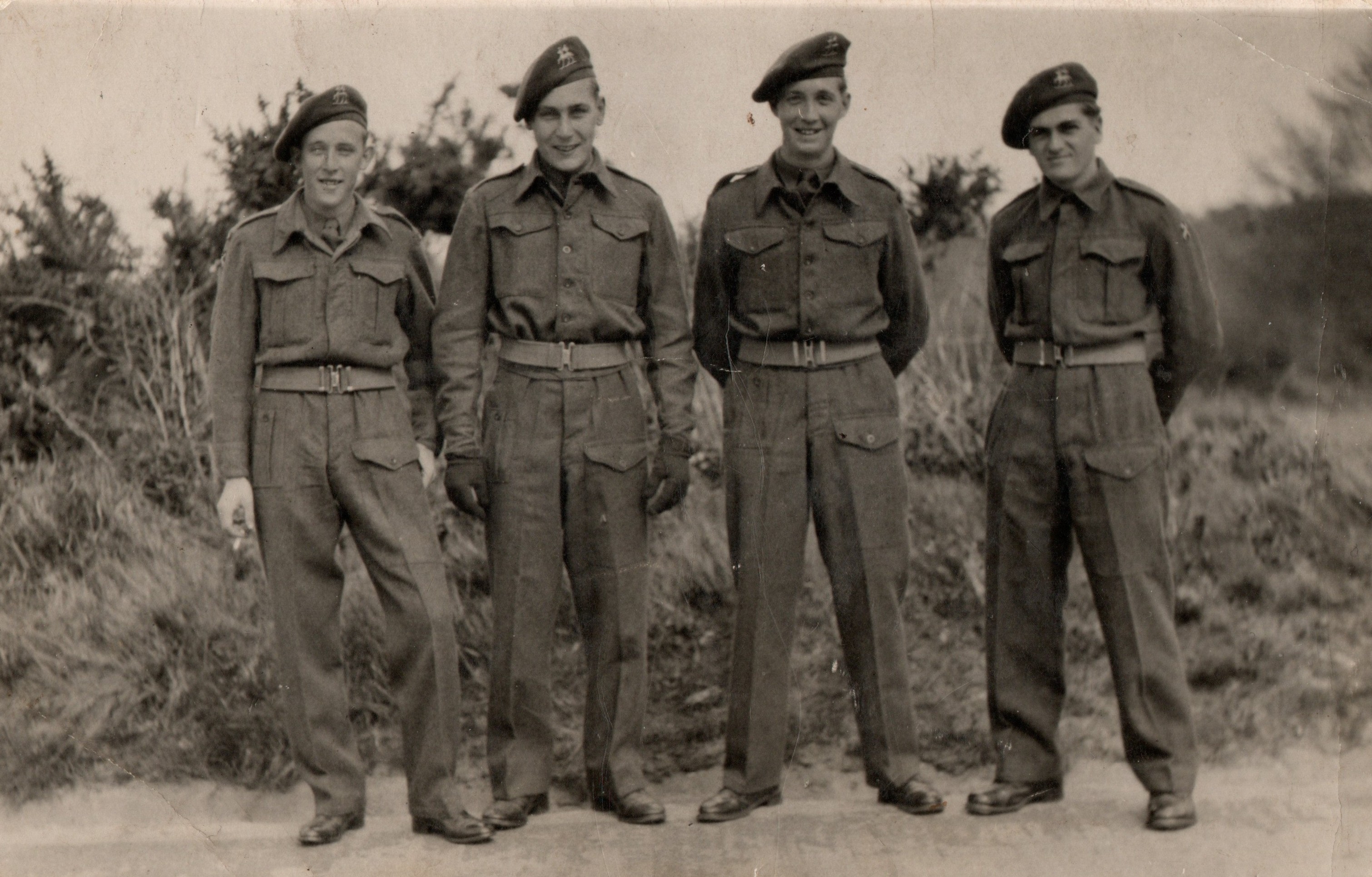
Gilbert (on the left) and three mates, Queen’s Royal Regiment, 1946.
 Steyning Rifle Range